
08-08-2026
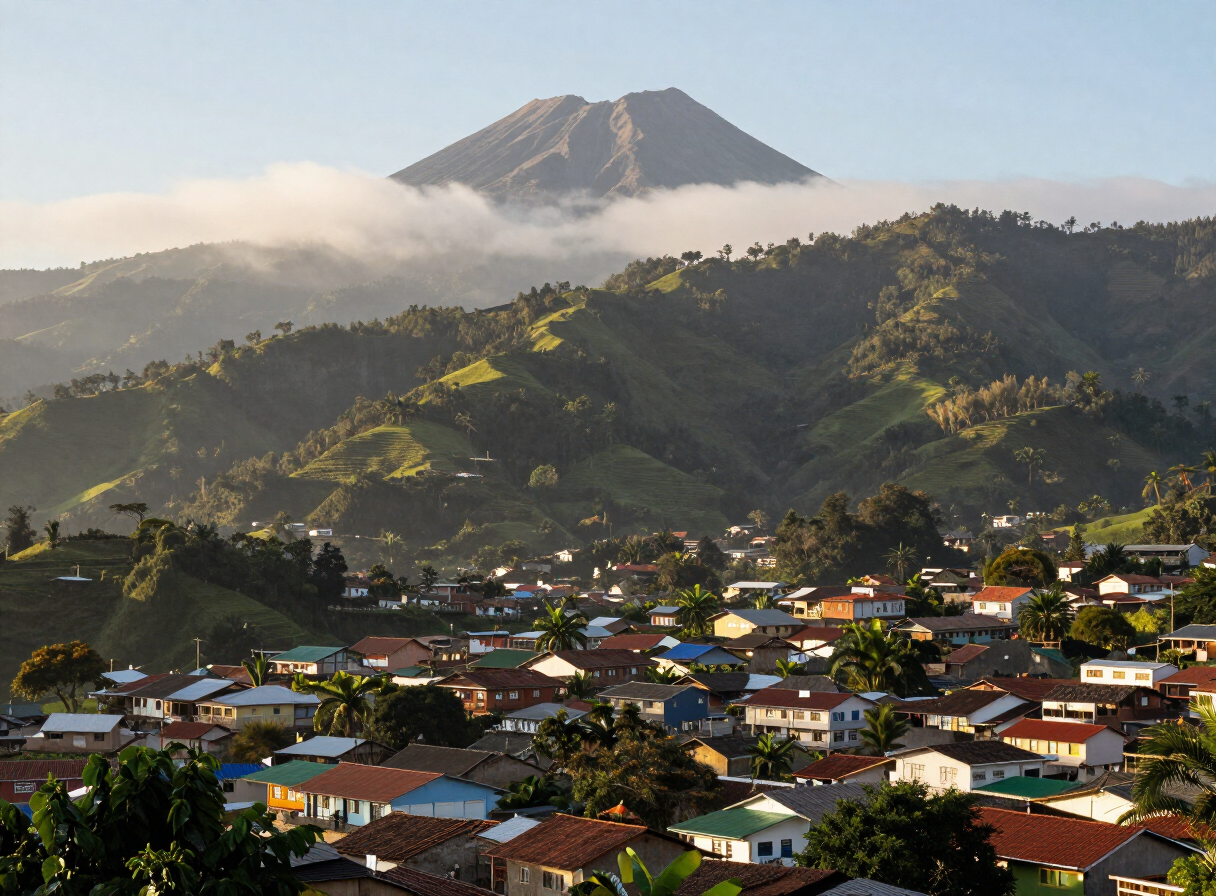
The biggest question I hear from Expats is, “Should I move to the mountains or the beach?” In Panama, that almost always means choosing between two towns that couldn’t feel more different — Boquete, tucked into the coffee-scented highlands of Chiriquí, and Coronado, the beach town an hour and a half west of Panama City that I now call my neighborhood.

I don’t live in either one exactly — I’m just down the road in Nueva Gorgona, close enough to run my errands in Coronado every week — so I can tell you honestly what beach life actually feels like day to day, not just what the brochures promise. Boquete is beautiful and loved, and I’ll describe it fairly, but not enough to pretend I’ve lived there.
So let’s actually compare them, from morning light to going to the grocery store.
Morning Light: A Sweater or an Ocean?
This is the part nobody explains well until you’ve lived it. Boquete sits at roughly 3,900 feet in the Cordillera Central, and that elevation changes everything about how a day starts. Mornings there are genuinely cool — sweater weather, mist sitting low over the coffee fincas, no air conditioning ever required as you simply won’t need it. People talk about Boquete mornings the way I talk about my coffee: quietly, calmly, like something they’re not in a hurry to finish.
Coronado mornings are a different animal entirely. The air is warm before you’ve even opened your eyes, and it carries that particular coastal humidity that can become part of your rhythm. But you get the ocean. I start most mornings with a walk on a blend of tan and dark gray volcanic sand that sparkles in the sunlight, watching the Pacific do its job on the shoreline, and there is nothing quiet about it — the waves here have some muscle to them, and I love feeling the water rush across my feet as I get my daily exercise. Then I go back to my high-rise condo and jump in the pool that overlooks the ocean.
Neither is better. One is a hush, the other is a heartbeat. I’d just ask yourself honestly which sounds and views do you want to wake up to for the next ten years.
Rent: The Mountains Win, Modestly
Both towns are considerably cheaper than Panama City, and both fall into roughly the same range for a comfortable life — but Boquete edges out slightly ahead on affordability. A one-bedroom in Boquete typically runs somewhere between $700 and $1,000 a month, with rents overall coming in noticeably lower than the capital’s. Coronado and its surrounding beach towns land in a similar band, generally $800 to $1,200 for a one-bedroom, though beachfront and gated-community units push that number up quickly, and a well-located two-bedroom with pool access can run closer to $1,000–$1,300.
The honest difference isn’t the number — it’s what the number buys. In Boquete, your rent buys elevation and quiet. In Coronado, it buys proximity to the water and to a much larger, more established support system, which brings me to the next comparison.
Clinics and Healthcare: Coronado Has the Infrastructure
This is the category that matters most once the honeymoon phase wears off, and it’s genuinely lopsided. Coronado has spent decades building out real medical infrastructure — routine clinics for check-ups and prescriptions right in town, plus Centro Médico San Fernando nearby in Chame for emergency care and specialists, along with pharmacies, dentists, and optometrists woven into daily life. If something happens, help is nearby.
Boquete’s healthcare picture is thinner. For anything beyond routine care, residents typically make the roughly five-hour trip to Panama City, or the shorter run to David, the nearby service hub with better hospital access. It’s manageable, and plenty of people manage it happily for years — but it’s a genuine trade-off, especially as you get older or if you’re managing something chronic.
Community: Different Sizes, Different Textures
Boquete has one of the longest-established expat populations in the country, drawn in by the climate and the coffee culture, with a tight, walkable town center of cafés and farmers markets. It has real depth of community — it’s just a smaller pond.
Coronado’s community is bigger and more woven into daily errands. It anchors an entire stretch of Pacific beach towns — Coronado itself, plus Gorgona, San Carlos, and Chame — and the whole corridor functions like one loose, overlapping social network. You run into the same faces at the market, the same faces at the beach club, the same faces at Tuesday’s community market. It doesn’t feel isolated, and that’s exactly the word I’d use to describe why so many people choose it over quieter, prettier, more remote coastal spots.
Coronado mornings are a different animal entirely. The air is warm before you’ve even opened your eyes, and it carries that particular coastal humidity that can become part of your rhythm. But you get the ocean. I start most mornings with a walk on a blend of tan and dark gray volcanic sand that sparkles in the sunlight, watching the Pacific do its job on the shoreline, and there is nothing quiet about it — the waves here have some muscle to them, and I love feeling the water rush across my feet as I get my daily exercise. Then I go back to my high-rise condo and jump in the pool that overlooks the ocean.
Neither is better. One is a hush, the other is a heartbeat. I’d just ask yourself honestly which sounds and views do you want to wake up to for the next ten years.
Rent: The Mountains Win, Modestly
Both towns are considerably cheaper than Panama City, and both fall into roughly the same range for a comfortable life — but Boquete edges out slightly ahead on affordability. A one-bedroom in Boquete typically runs somewhere between $700 and $1,000 a month, with rents overall coming in noticeably lower than the capital’s. Coronado and its surrounding beach towns land in a similar band, generally $800 to $1,200 for a one-bedroom, though beachfront and gated-community units push that number up quickly, and a well-located two-bedroom with pool access can run closer to $1,000–$1,300.
The honest difference isn’t the number — it’s what the number buys. In Boquete, your rent buys elevation and quiet. In Coronado, it buys proximity to the water and to a much larger, more established support system, which brings me to the next comparison.
Clinics and Healthcare: Coronado Has the Infrastructure
This is the category that matters most once the honeymoon phase wears off, and it’s genuinely lopsided. Coronado has spent decades building out real medical infrastructure — routine clinics for check-ups and prescriptions right in town, plus Centro Médico San Fernando nearby in Chame for emergency care and specialists, along with pharmacies, dentists, and optometrists woven into daily life. If something happens, help is nearby.
Boquete’s healthcare picture is thinner. For anything beyond routine care, residents typically make the roughly five-hour trip to Panama City, or the shorter run to David, the nearby service hub with better hospital access. It’s manageable, and plenty of people manage it happily for years — but it’s a genuine trade-off, especially as you get older or if you’re managing something chronic.
Community: Different Sizes, Different Textures
Boquete has one of the longest-established expat populations in the country, drawn in by the climate and the coffee culture, with a tight, walkable town center of cafés and farmers markets. It has real depth of community — it’s just a smaller pond.
Coronado’s community is bigger and more woven into daily errands. It anchors an entire stretch of Pacific beach towns — Coronado itself, plus Gorgona, San Carlos, and Chame — and the whole corridor functions like one loose, overlapping social network. You run into the same faces at the market, the same faces at the beach club, the same faces at Tuesday’s community market. It doesn’t feel isolated, and that’s exactly the word I’d use to describe why so many people choose it over quieter, prettier, more remote coastal spots.
Grocery Runs: Advantage Coronado, By a Wide Margin
Here’s where living nearby gives me real, lived experience instead of secondhand notes. My grocery run involves choices most beach towns in Panama simply don’t offer: Riba Smith for imported goods and a proper bakery counter, Rey for the basics, Super 99 if I’m being budget-conscious, and a fresh fruit and vegetable truck on Wednesday for produce I still can’t believe costs what it does. I usually eat at home and a weekly grocery run for myself typically lands somewhere between $80 and $100, and that’s without cutting corners.
Boquete’s grocery store scene, by contrast, leans smaller and more local — genuinely lovely for produce and coffee, but thinner on the specialty and imported items that some expats end up missing more than they expected. It’s part of the trade-off for that quiet mountain rhythm: what you gain in stillness and peace, you sometimes give up in selection.
So Which One Is It?
Ask yourself what you actually reach for on a hard day. If it’s a sweater and a quiet porch, Boquete’s mist-covered mornings might be your answer. If it’s the sound of waves doing their relentless, unbothered thing while you drink your coffee too hot in humid air — well, you already know what I chose.
Either way, both towns prove the same thing I keep coming back to in this post: you really can build a full, affordable, unhurried life here in more than one kind of landscape. You are never too old to begin again — you just get to pick your climate and scenery while you do it.
Please post any comments or questions you may have.
This post contains affiliate links where I earn a commission at no cost to you.
